Table of Contents
The Alluring Emerald
Green, but not simply green. Emeralds carry a depth of color that shifts depending on the light, the angle, the moment you're in. Hold one near a window in the afternoon and it reads differently than it does under the warm glow of evening. That quality, that responsiveness, is part of what makes them so enduring. And it's why people have been reaching for them, century after century, when they wanted their jewelry to mean something.
For those born in May, the emerald isn't just a birthstone. It's a stone with staying power.
What Makes an Emerald
Emeralds belong to the beryl mineral family. Their color comes from trace amounts of chromium, and sometimes vanadium, which gives certain stones a cool, faintly bluish cast. The most prized examples read as a pure, vivid green with no secondary hue pulling it off course. Not too yellow. Not too blue. Just green in the most settled, confident sense of the word.
What separates a fine emerald from a forgettable one is the quality of that color. Even saturation, consistent throughout the stone, no fading at the edges or pooling near the center. The depth should feel alive, not flat. When you look into a well-cut emerald, there's something happening inside it.
Every natural emerald also carries what gemologists call a "jardin," the French word for garden. It's a network of inclusions, tiny internal features that formed as the stone crystallized over millions of years. Fissures, mineral traces, wisps of material caught in the process of becoming. In most gemstones, inclusions are a liability. In emeralds, they're expected. They're also a fingerprint. No two emeralds have the same jardin, which means every natural stone is genuinely one of a kind. That irregularity isn't a flaw. It's evidence of how the stone came to be.
Emeralds sit at 7.5 to 8 on the Mohs hardness scale, which makes them durable enough for everyday wear. They do ask for a little more attention than harder stones like diamonds or sapphires. The same inclusions that make them beautiful can also make them more vulnerable to impact if they're not handled thoughtfully. That's not a reason to keep them in a box. It's a reason to wear them with some awareness of what they are.
How to Care for Emerald Jewelry
Caring for an emerald is straightforward once you know what to avoid. Skip the ultrasonic cleaner. Harsh chemicals and commercial jewelry cleaners can damage both the stone and its inclusions, especially if the emerald has been treated, which most have. A soft-bristle brush, mild soap, and lukewarm water is all you need. Clean gently, rinse thoroughly, and dry with a soft cloth. Store emerald pieces separately so nothing scratches the surface.
Many natural emeralds are treated with oil or resin to improve clarity. It's a standard, widely accepted practice in the industry, and it doesn't diminish the stone's value or beauty. Over time, that treatment may need refreshing. A jeweler can assess this during a routine cleaning and advise accordingly.
Routine professional check-ins are worth scheduling. A jeweler can inspect the setting, look for signs of wear, and make sure the stone is secure. Emeralds are worth maintaining. They reward the attention.
What to Look for When Choosing One
Color comes first, and always will. Look for richness and evenness across the whole stone. A slightly blue-green emerald often reads deeper and more complex than one with a yellowish cast, though that's ultimately a matter of personal preference. What matters more is that the color holds, that it doesn't shift dramatically under different lighting or look uneven when you tilt the stone.
Clarity is the next consideration, though the standard is different here than it would be for a diamond. Some inclusions are expected and accepted in natural emeralds. What you're evaluating is whether they significantly affect the stone's transparency or its structural integrity. A jardin that gives the emerald character is one thing. Inclusions that cloud the stone or compromise its surface are another.
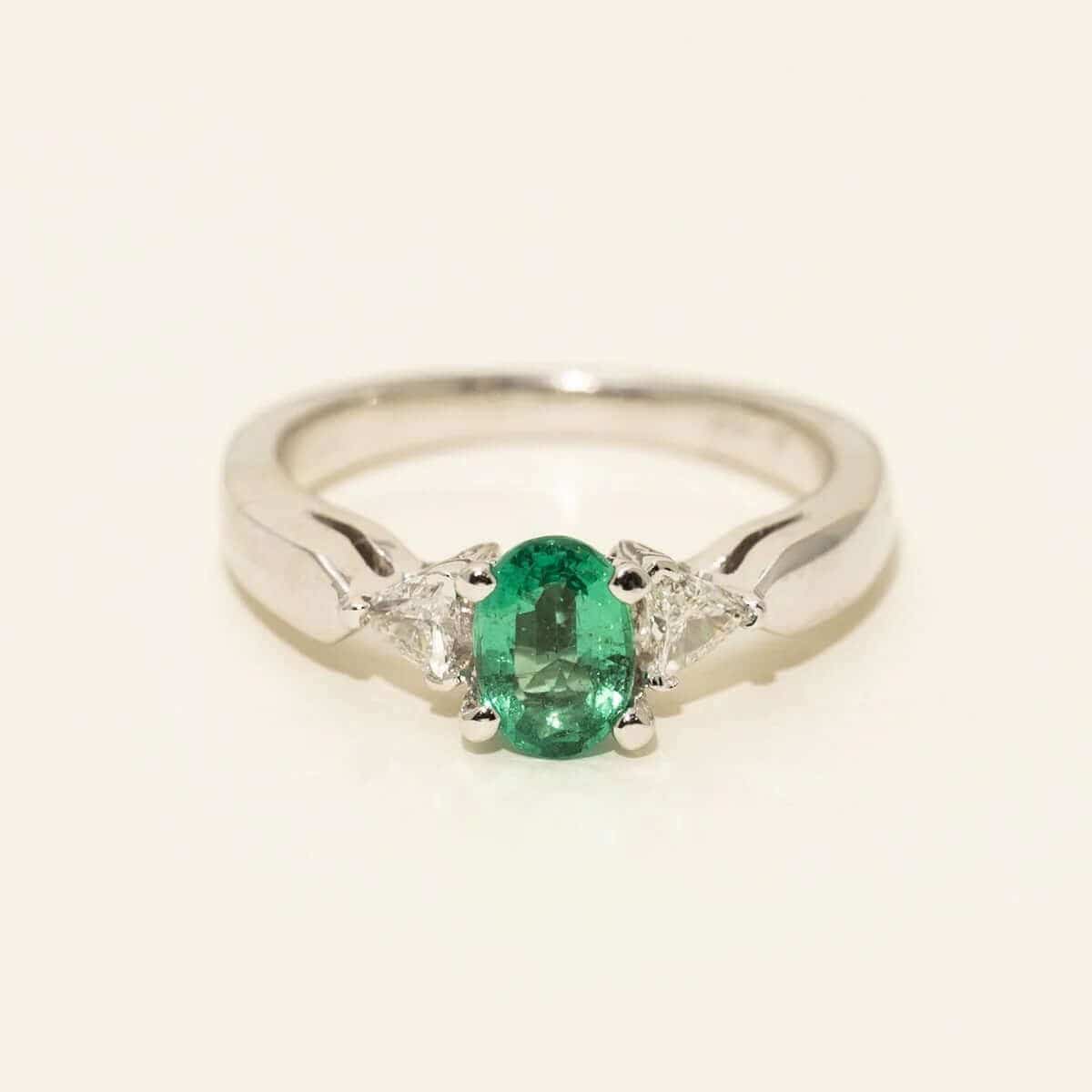
Cut shapes how the color reads in the light. The classic step cut, the one literally named for this stone, was designed to open up the interior and let color do the work. It's a deliberate, architectural cut that suits the emerald's nature. Oval and round cuts introduce more sparkle. Pear shapes add movement. None of these is wrong. The right cut depends on the piece you're building and what you want the stone to do.
Carat weight is worth understanding before you shop. Large, high-quality emeralds are genuinely rare, more so than comparable diamonds of similar size. If a significant stone matters to you, be prepared for the price to reflect it. Most people find that balancing a slightly smaller stone with excellent color and clarity serves them better than prioritizing size at the expense of everything else.
When in doubt, let the stone tell you. A fine emerald has a presence that's hard to talk yourself into or out of. You'll know it when you're looking at it.
A Stone That Has Meant Something
Emeralds show up across cultures and centuries not because they were convenient, but because people kept choosing them. Egypt's earliest known emerald mines date back thousands of years. Cleopatra's affinity for them is well documented, and the stones were woven into both personal adornment and cultural ritual. The Romans prized them for their perceived ability to protect and restore. Pliny the Elder wrote about emeralds with genuine admiration, noting the way their color soothed the eye in a way no other stone could.
In South America, the Muzo people of Colombia were producing some of the world's finest emeralds long before Spanish conquistadors arrived and fundamentally changed who those stones belonged to and where they traveled. Colombian emeralds remain the benchmark today. The name itself carries weight in the industry.
Throughout history, emeralds have been associated with renewal, with fidelity, with a kind of clear-eyed calm. Their connection to Venus in Roman tradition made them a natural token of love. They've appeared in royal collections, museum holdings, and private jewelry boxes passed between generations. The Mogul Emerald, carved with Islamic prayers and floral detail in the late seventeenth century, is a piece of history as much as jewelry. The Chalk Emerald, known for its exceptional color and clarity, sits in the Smithsonian's National Gem and Mineral Collection. These are extreme examples, but they point to something real: people have always found emeralds worth keeping.
None of that history is required context when you're choosing a piece for yourself or someone you love. But it adds a layer to the choice that some people find meaningful. A stone that has carried significance across that many cultures and that many centuries is a stone that holds up.
Emerald as a Symbol
The green of an emerald reads, almost instinctively, as something living. It belongs to the same visual family as new leaves, still water, the particular quality of light in early spring. May, as a month, is already associated with that kind of renewal, which is part of why the association between emeralds and rebirth has persisted across so many different traditions.
Beyond renewal, emeralds have long carried associations with clarity and wisdom. They were thought to sharpen perception, to help the wearer see things as they actually are. Whether or not you hold with that kind of symbolism, there's something about the stone's color that does feel grounding. It's not excitable. It doesn't demand attention. It holds its ground quietly, which makes it a fitting choice for people who tend to do the same.
As a gift, an emerald carries weight without being heavy. It says something about the person choosing it and something about the person receiving it. For a May birthday, it's a birthstone in the truest sense: a stone that connects to the month, the season, the particular quality of this time of year. For an anniversary, especially a twentieth, which traditionally calls for emerald, it marks a milestone with the kind of depth the occasion deserves. And for someone who simply wants a stone that reflects where they are right now, an emerald is a considered choice.
Wearing an Emerald
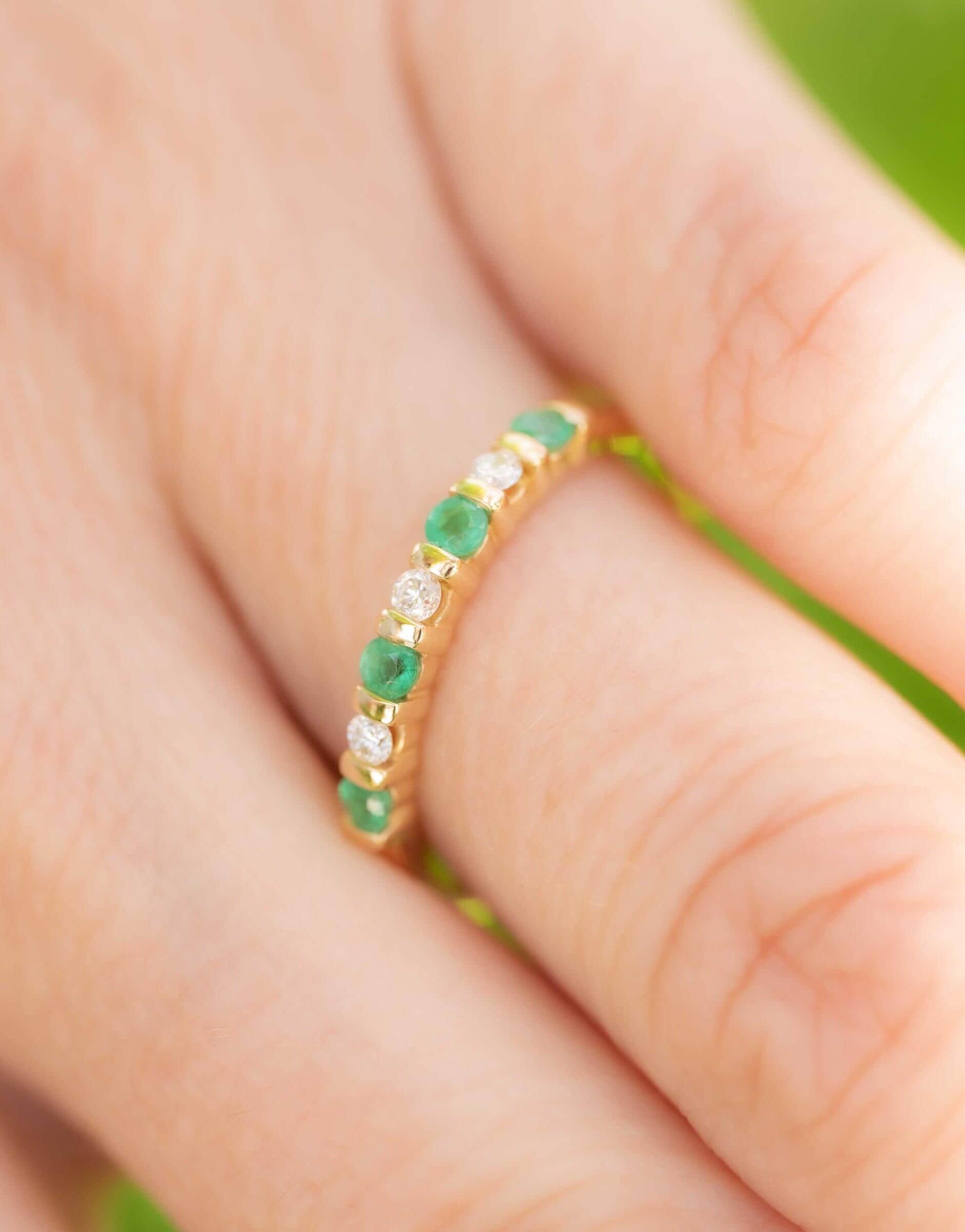
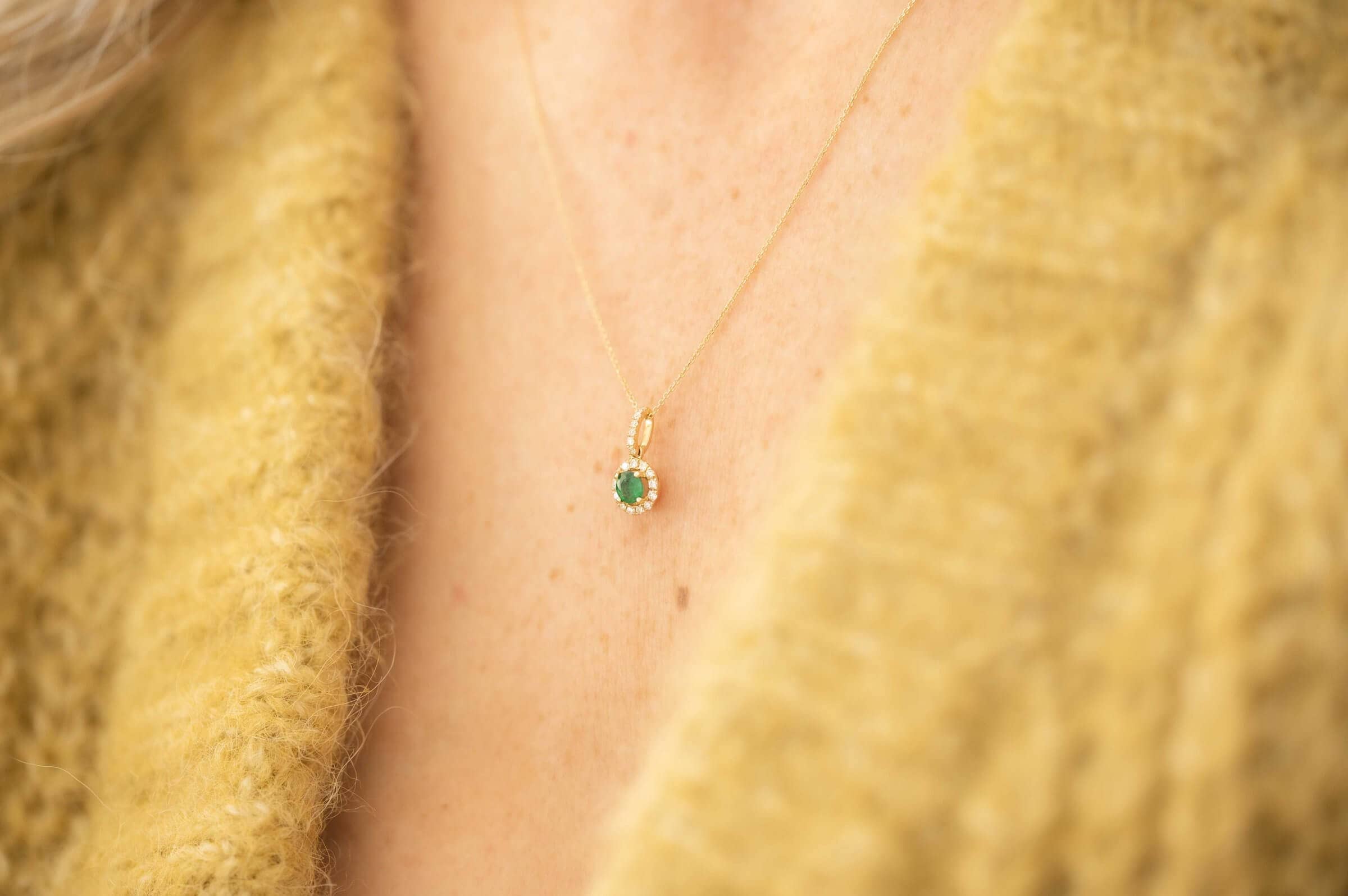
What an emerald does, worn well, is quiet everything else down. The color is settled enough that it doesn't need much company. A single stone in yellow gold is complete on its own. Yellow gold warms the green in a way that feels natural, grounded. White gold or platinum cools the palette and lets the stone read crisper, more modern. Both work. It comes down to what you're drawn to.
A pavé halo adds contrast without competing. A bezel setting gives the stone a clean, architectural frame. Prong settings let the most light in and keep the stone as the clear focal point. The setting style shapes how the piece feels as much as how it looks, and it's worth spending time with different options before deciding.
Stacked with other pieces, an emerald tends to anchor the arrangement rather than fight for attention within it. A simple band beside an emerald ring lets both breathe. A delicate chain with an emerald pendant works the same way. The stone earns its place without needing to be the loudest thing in the room.
Choosing One That's Yours
Some pieces are chosen for the moment. A stone that catches your eye at the right time, for the right reason, and ends up staying. Emeralds have a way of doing that. They're not the obvious choice, which is part of what makes choosing one feel personal. It says something about your taste, your confidence, your willingness to let a piece of jewelry be genuinely distinctive.
If you're considering an emerald for a May birthday, an anniversary, a meaningful milestone, or simply because it's the right stone for where you are right now, that's reason enough. The history is there if you want it. The symbolism is available if it resonates. But at the end of it, what matters is that you look at the stone and it feels like yours.
The best jewelry usually does. Browse our collection of emerald jewelry to add this beautiful gemstone to your collection today!