Table of Contents
If you were born in August, the peridot birthstone belongs to you. It's one of the only gemstones that forms not in the earth's crust, where most gems take shape, but far below it, in the molten rock of the upper mantle. That origin story alone sets the peridot birthstone apart from nearly every other stone in a jeweler's case.
This guide covers what the peridot birthstone is, where it comes from, how it's graded, and what to consider before choosing a piece. Whether you're shopping for an August birthday or simply drawn to its color, here's what's worth knowing.
What Is Peridot?
Peridot is the gem form of olivine, a mineral so common in the earth's mantle that geologists consider it one of the building blocks of the planet's interior. What makes peridot rare is not the mineral itself but the circumstances that bring it to the surface: volcanic eruptions, and in a handful of documented cases, meteorites.
Most gemstones grow slowly, in pockets and veins closer to the surface. The peridot birthstone arrives differently, carried up in magma from depths of 20 to 55 miles below the earth's surface. Few gems can claim an origin that dramatic.
Why Peridot Is August's Birthstone
Peridot has held its place on the birthstone calendar for centuries, though its history stretches back even further. Ancient Egyptians mined peridot on the Red Sea island of Zabargad as early as 1500 BCE, and some historians believe several of Cleopatra's famed "emeralds" were, in fact, peridot. The Egyptians called it the "gem of the sun," a fitting name for a stone that seems to hold light rather than simply reflect it.
Its formal place as August's birthstone was set by the jewelry trade in the early 20th century, when the modern birthstone list was standardized. The peridot birthstone has remained on it ever since, prized for a color that few other stones can match.
What Color Is Peridot?
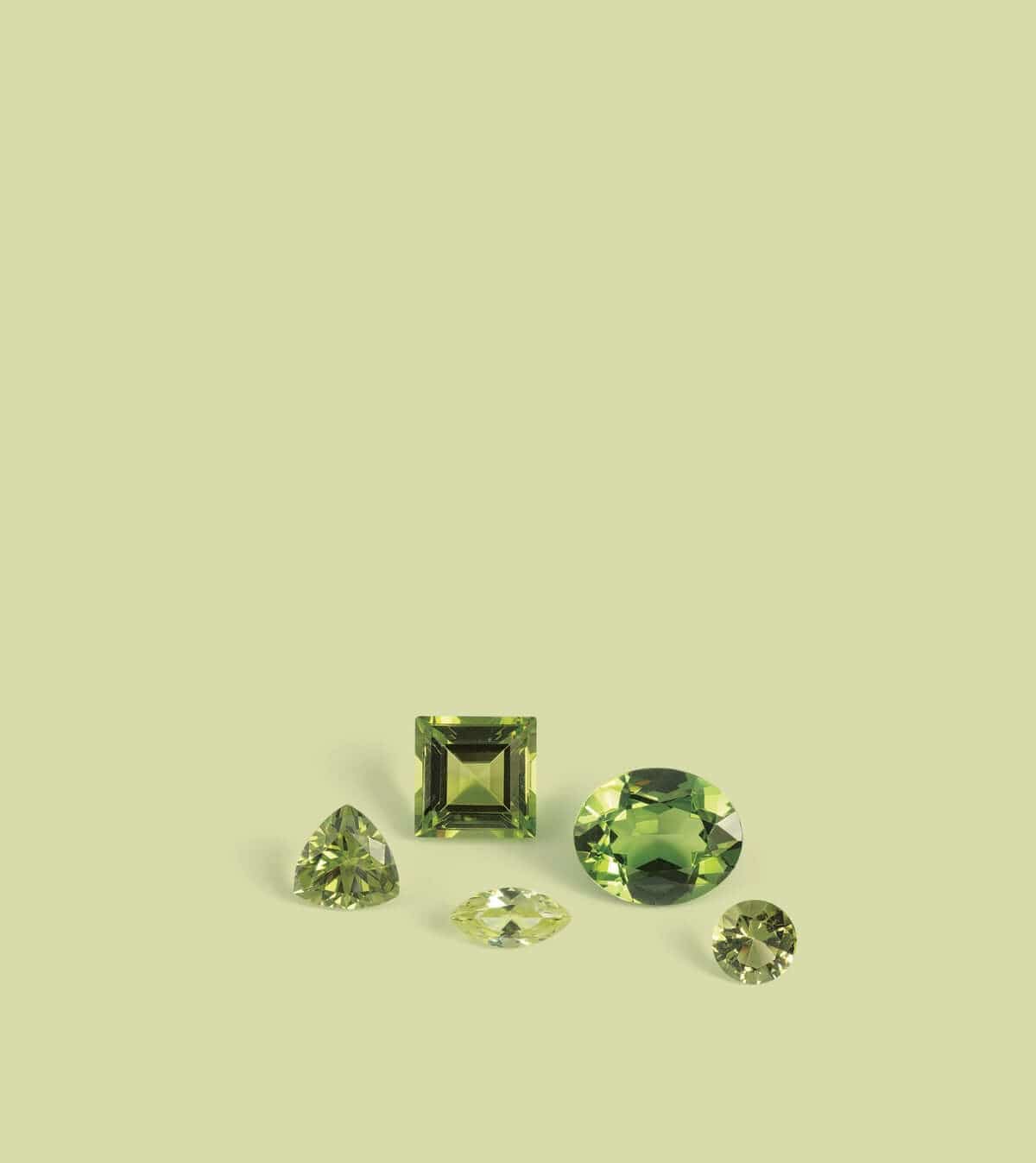
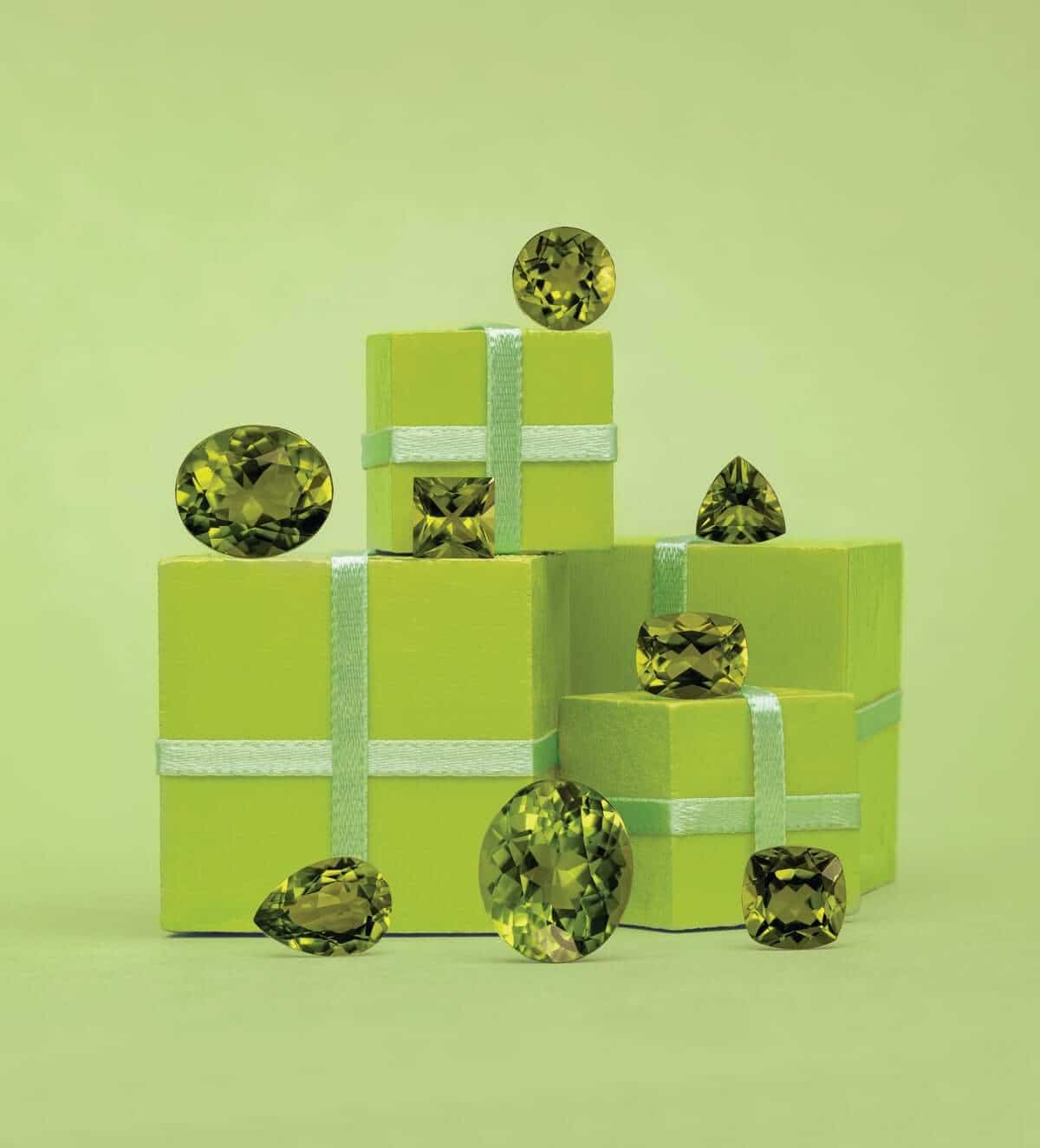
Peridot is defined by one thing above all: its color. Unlike most gemstones, which come in a range of shades, peridot is only ever green, ranging from a soft yellow-green to a rich, olive-toned green. That color comes from iron within the crystal structure itself, not from trace impurities the way it does in stones like emerald or sapphire. This is part of why peridot's green feels so consistent and so distinctly its own.
The most valued peridot leans toward a pure, vivid green with minimal yellow or brown undertone. Stones from certain sources, including Myanmar's Mogok region, are known for producing some of the finest color available.
How Peridot Is Graded
Peridot birthstone quality is evaluated using the same basic framework as most colored gemstones: color, clarity, cut, and carat weight, with color carrying the most weight in determining value.
Color. Look for a saturated, pure green with as little brown or yellow as possible. The most desirable peridot has a slightly darker, richer tone rather than a pale, washed-out green.
Clarity. Peridot typically forms with few inclusions, and eye-clean stones are common and affordable. Visible inclusions, when present, are usually small and dark, and can reduce brilliance if they cluster near the surface.
Cut. Because peridot has strong double refraction, meaning light splits as it passes through the stone, a skilled cutter positions facets to minimize any blurred or doubled appearance at the edges. A well-cut peridot should look crisp, not hazy.
Carat weight. Peridot is available in larger sizes more affordably than many other gems, since larger rough crystals are more commonly found. This makes it possible to get a substantial, eye-catching stone without the price jump that comes with large diamonds or sapphires.
Peridot doesn't try to imitate any other stone. Its green is entirely its own, and that's exactly the point.
What to Look for When Buying Peridot Jewelry
A few practical things to keep in mind before choosing a peridot birthstone piece:
- Prioritize color over size. A smaller stone with rich, saturated color will read as more valuable and more beautiful than a larger stone with a pale or brownish tone.
- Check the setting. Peridot has a hardness of 6.5 to 7 on the Mohs scale, softer than sapphire or diamond. A protective setting matters more here than it does with harder stones, particularly for rings worn daily.
- Consider the metal. Peridot's warm green pairs beautifully with yellow gold, which echoes its golden undertones, but also holds its own in white gold or silver for a cooler, more contemporary look.
- Ask about origin when it matters to you. Peridot from Arizona's San Carlos Apache Reservation, Myanmar, and Pakistan's Kashmir region each carry slightly different characteristics, and origin can be part of a stone's story.
Peridot at Day's
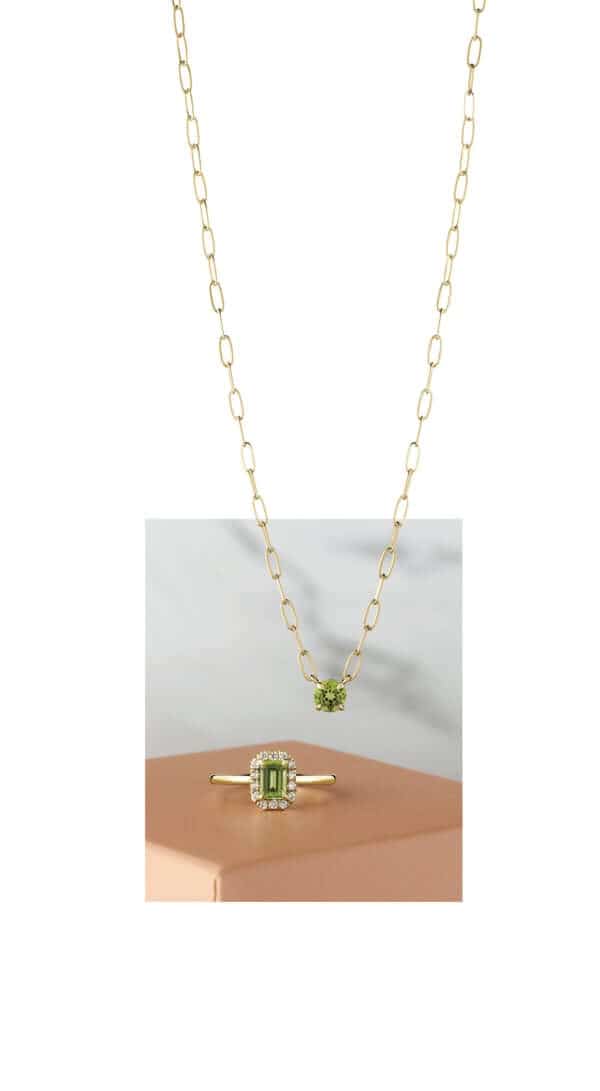
Peridot's history runs deep, and so does its versatility. It works as a birthstone gift, a stacking ring, a pair of everyday studs, or a statement piece for someone who wants their August birthday to show. At Day's, our gemologists select peridot for its color first, the quality that matters most, and help match a stone to the setting and metal that will let it do what it does best.
If you're shopping for an August birthday or simply drawn to one of the more unusual origin stories in the gem world, visit your nearest Day's location or explore our peridot birthstone jewelry collection online. Our team can walk you through stone quality in person and help you find a piece worth keeping.