Table of Contents
Tilt an opal toward a window and watch it answer. Flashes of red, green, and violet slide across the surface, then rearrange the moment your hand moves. No two stones show their color the same way, and that individuality has made the opal birthstone a favorite for October birthdays for generations.
Some opals glow with soft, milky pastels. Others hold a deep, dark body lit with electric color. Choosing one comes down to what catches your eye and how you plan to wear it.
This guide covers what opal is, where its color comes from, how Ethiopian and Australian opal compare, and how to care for opal jewelry so it stays luminous for years.
What Is the Opal Birthstone?
The opal birthstone is the traditional gem for October. Opal is made of silica and water, and its signature trait is play-of-color: flashes of spectral color that shift as the stone moves through light.
Opal forms when water carrying dissolved silica seeps into cracks and cavities in rock. Over long stretches of time, the water evaporates and leaves silica behind. Most opal holds roughly 3 to 10 percent water within its structure, which shapes how it should be worn and cared for.
On the Mohs scale, opal measures 5.5 to 6.5. That makes it softer than quartz and much softer than sapphire or diamond, so opal rewards thoughtful settings and gentle handling.
The name likely traces to the Sanskrit upala, meaning precious stone, which passed into Latin as opalus. Opal has long been associated with hope, creativity, and inspiration, a fitting meaning for a gem that never looks the same twice.
Why Does October Have Two Birthstones?
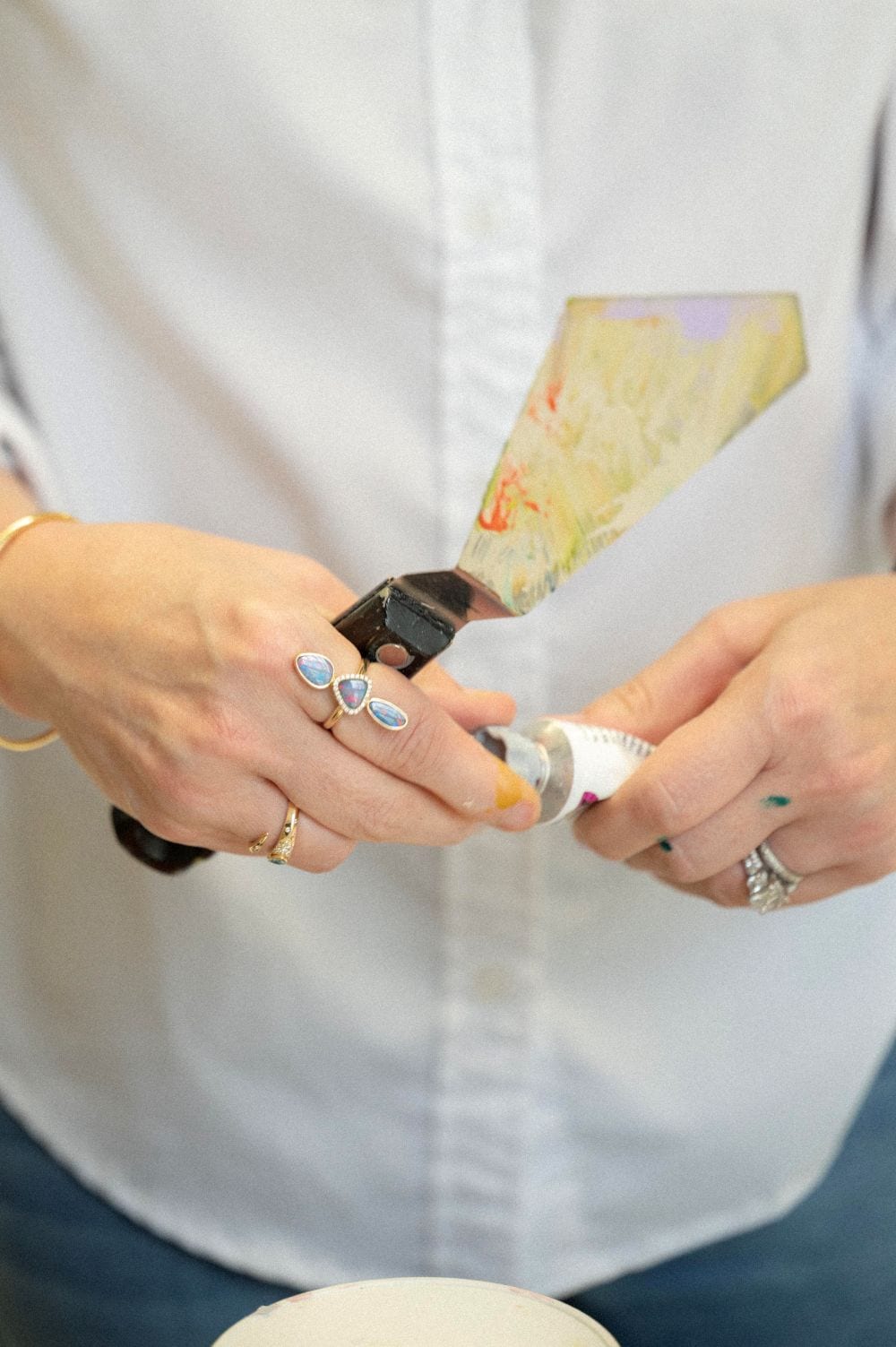
October has two birthstones: opal and tourmaline. Opal held the October spot on the first standardized American birthstone list in 1912. Tourmaline joined as an alternative decades later, giving October birthdays a choice between opal's shifting color and tourmaline's saturated tones of pink, green, and blue.
For New Englanders, tourmaline carries special meaning. It is Maine's state mineral, and Maine tourmaline has been mined here since the 1800s. Explore the story in our guide to Maine tourmaline.
What Gives Opal Its Play-of-Color?
Inside precious opal, microscopic spheres of silica stack in orderly rows. When light passes between them, it bends and splits into spectral color. The size of the spheres decides which colors appear. Smaller spheres produce blues and violets. Larger spheres produce oranges and reds, which is why red flashes are the rarest and most prized.
Common opal lacks this ordered structure. It can be beautiful in solid color, but it shows no play-of-color.
Patterns to know
- Pinfire: tiny, closely spaced points of color.
- Flash: broad patches of color that appear and disappear as the stone turns.
- Harlequin: distinct, angular blocks of color in a mosaic pattern. True harlequin is rare and highly valued.
Ethiopian Opal vs. Australian Opal: What's the Difference?
Australian opal forms in sedimentary rock and is generally stable around water. Ethiopian opal forms in volcanic rock and is often hydrophane, meaning it can absorb water. Australia is the source of rare black opal, while Ethiopia offers vivid play-of-color at a more approachable price.
Australian opal
Australia has supplied most of the world's precious opal since the late 1800s, and opal is its national gemstone. Each mining region has a distinct character:
- Lightning Ridge, New South Wales: home of black opal, with a dark body that makes color glow with intensity.
- Coober Pedy, South Australia: known for white and crystal opal with lighter, softer bodies.
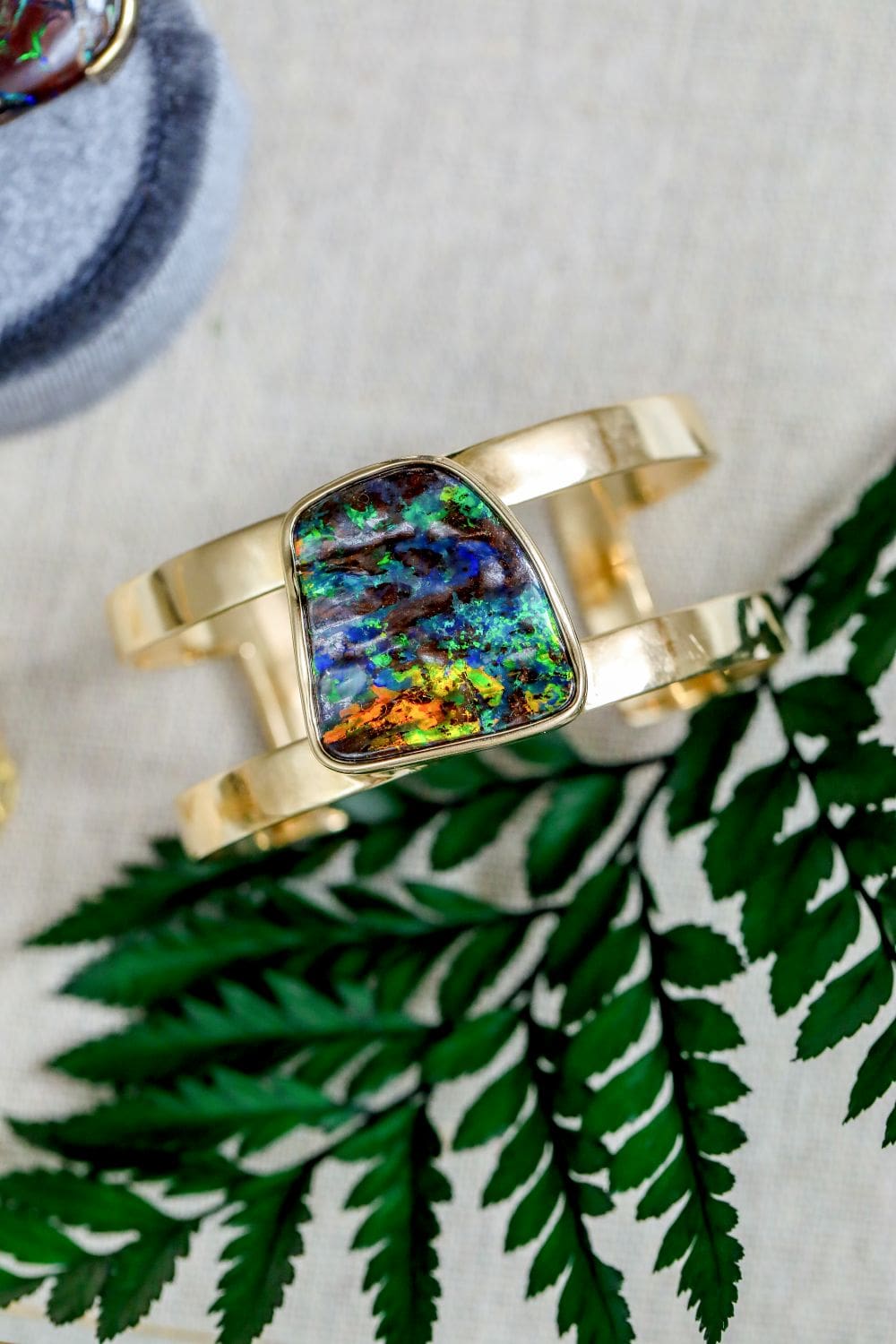
- Queensland: the source of boulder opal, where thin veins of color stay attached to their natural ironstone.
Australian opal tends to be durable for a softer gem and holds up well to everyday care, which makes it a common choice for rings.
Ethiopian opal
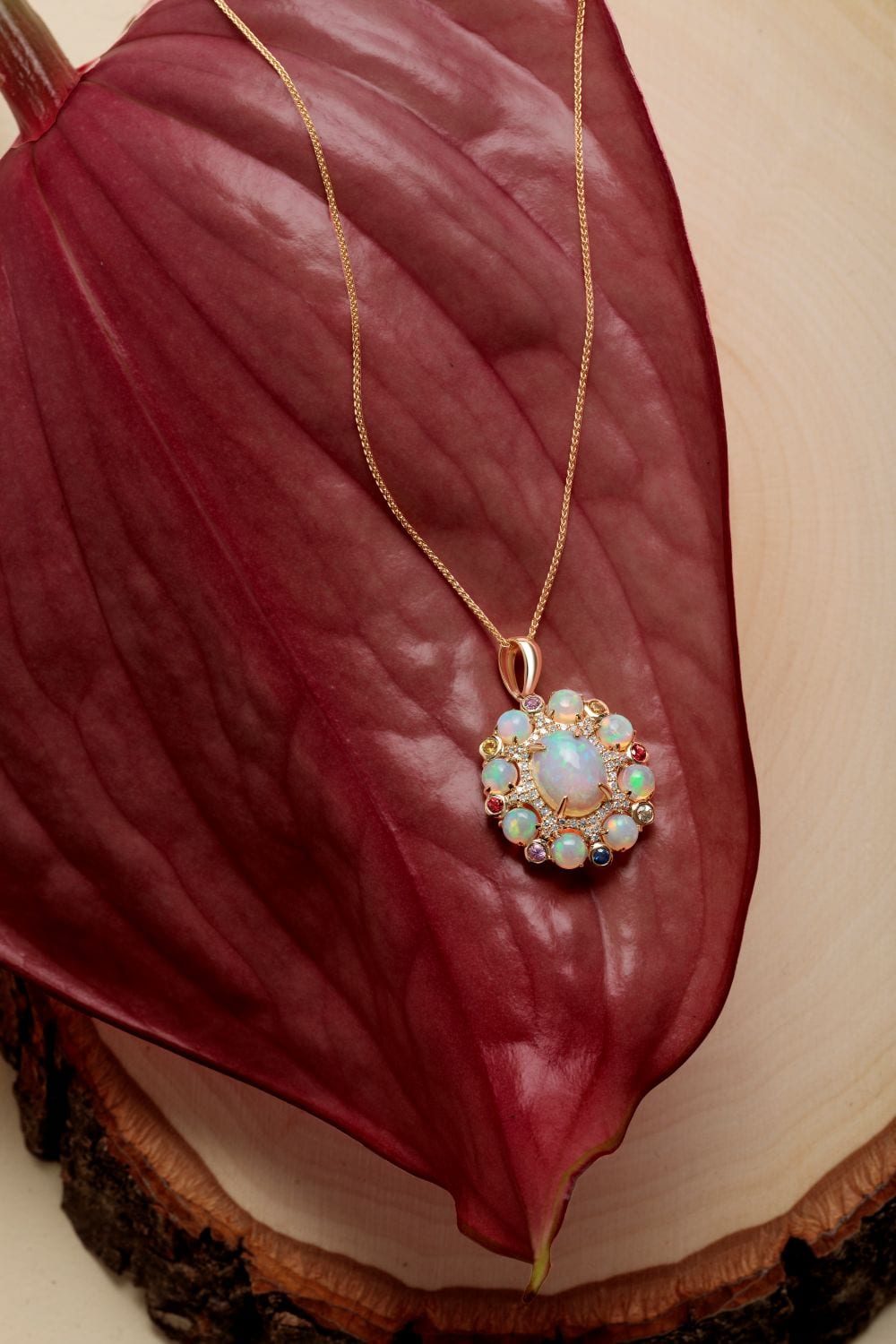
A major deposit in Ethiopia's Wollo Province, discovered in 2008, changed the opal market. Ethiopian opal often has a white to transparent crystal body with bright, broad flashes of color, and some stones show a distinctive honeycomb pattern.
Many Ethiopian opals are hydrophane. When exposed to water, they can turn temporarily transparent or lose their play-of-color, which usually returns as the stone dries. This calls for a little extra care: no soaking, and minimal contact with lotions and oils.
Side by side
| Australian opal | Ethiopian opal | |
|---|---|---|
| Geology | Sedimentary | Volcanic |
| Body colors | Black, white, crystal, boulder | White, crystal, some darker stones |
| Water sensitivity | Generally stable | Often hydrophane; absorbs water |
| Signature look | Deep, glowing color on dark or light bodies | Bright, broad flashes; honeycomb patterns |
| Price range | Wide; fine black opal sits at the top | Typically more approachable |
| Best for | Rings and daily wear | Pendants, earrings, and occasional rings |
Which one is right for you?
If you want a ring you'll wear every day, or you're drawn to the depth of black opal, Australian opal is a strong fit. If you love bright, lively color and want more presence for your budget, Ethiopian opal delivers beautifully, especially in a pendant or earrings.
What Are the Other Types of Opal?
Beyond origin, opal is often described by its body color and structure:
- Black opal: a dark body tone that intensifies play-of-color. The rarest type.
- White opal: a light, milky body with softer, pastel flashes.
- Crystal opal: a transparent to semi-transparent body that lets color appear to float inside.
- Boulder opal: opal left on its ironstone host rock, often with organic, flowing shapes.
- Fire opal: a warm yellow, orange, or red body, most famously from Mexico. Some fire opal shows play-of-color; much of it does not.
You may also see doublets and triplets. These are assembled stones, with a thin layer of opal backed by another material and, in triplets, capped with clear quartz or glass. They offer the look of opal at a lower price, and a reputable jeweler will always disclose them.
How to Choose an Opal Birthstone Ring, Pendant, or Earrings
The value of an opal birthstone comes from a combination of factors. Look for these when comparing stones:
- Body tone: darker bodies generally make color appear more vivid.
- Brightness: how strongly the color shines in different lighting.
- Color range: stones that show red alongside other colors are rarer.
- Pattern: distinct, well-defined patterns add character and value.
- Setting: bezel settings protect the edges of the stone, a smart choice for rings.
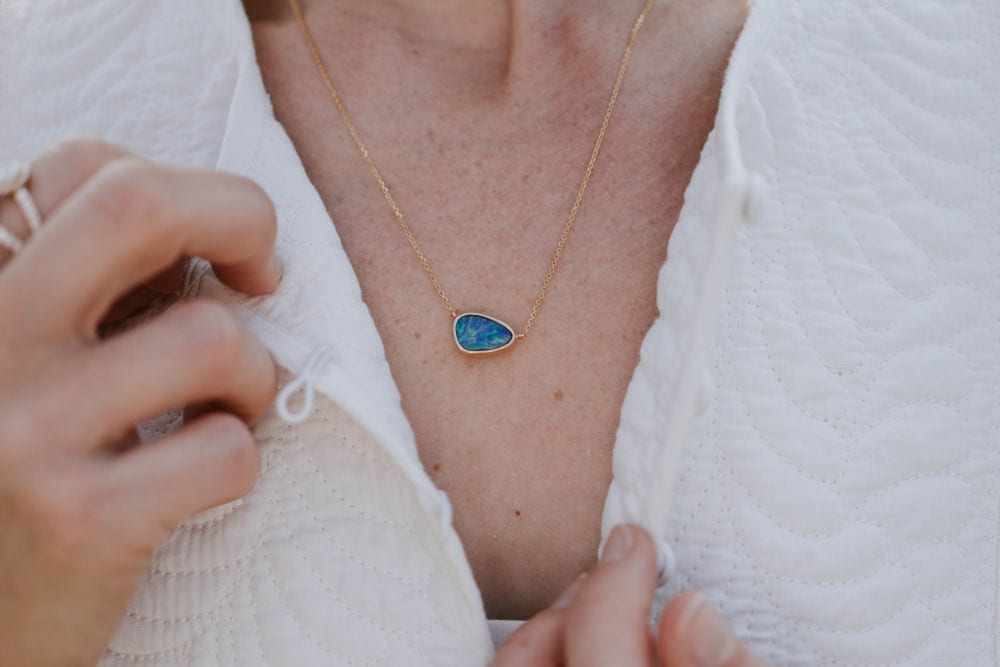
The opal birthstone is a lovely choice for October birthstone jewelry worn often. Pendants and earrings face less wear than rings, so they suit any opal. For an opal engagement ring or a ring you'll wear daily, choose a protective setting and plan for gentle care.
How Do You Care for Opal Jewelry?
Opal rewards a gentle routine. These habits keep it bright:
- Clean gently. Wipe solid opal with a soft cloth dampened in warm water and mild soap, then dry it right away.
- Skip the machines. Never use ultrasonic or steam cleaners on opal.
- Avoid soaking. Doublets, triplets, and hydrophane Ethiopian opal should never sit in water.
- Take it off first. Remove opal rings before workouts, cleaning, swimming, or gardening.
- Protect from heat. Sudden temperature changes can cause fine cracks called crazing.
- Store it on its own. Keep opal in a soft pouch away from harder gems that can scratch it.
Have your opal jewelry checked by a professional once a year so settings stay secure. Our jewelry care and repair services make it simple.
Opal Birthstone Jewelry at Day's Jewelers
At Day's Jewelers, we select every opal in our collection by hand for its color, brightness, and character. Our sales team members can show you Australian and Ethiopian opal side by side, in natural light, so you can see how each stone moves and choose the one that feels like yours.
Looking for something one of a kind? Our custom design team can set a loose opal in a piece built around your style. And for October birthdays with a love of New England, Maine tourmaline offers a meaningful alternative.
Browse our opal jewelry collection or visit a Day's location to explore October's birthstones in person.
Finding Your Opal
The opal birthstone is a study in individuality. Whether you choose the deep glow of Australian black opal or the bright flash of an Ethiopian crystal, you're choosing a gem no one else will have.
Take your time with it. Look at opal in different light, notice which colors draw you in, and consider how you'll wear it. The right stone will feel personal from the first glance.
Ready to find yours? Schedule a consultation with our sales team members or visit your nearest Day's Jewelers location.