Table of Contents
Hold a citrine up to a window in late autumn and it glows the way maple leaves do in the last days of October: honeyed, warm, and lit from within. The citrine birthstone belongs to November, a month that often arrives gray and quiet, and that contrast is a large part of its charm.
Citrine shares November with topaz, and many people born this month reach for it first. Its color is easy to love, it holds up well to daily wear, and it remains one of the more accessible colored gemstones in fine jewelry.
Below, we cover what citrine is, where its color comes from, what it has meant across the centuries, and how to choose and care for a piece you plan to wear often.
What Is the Citrine Birthstone?
The citrine birthstone is a yellow to reddish-orange variety of quartz and one of two official birthstones for November, alongside topaz. Its name comes from the French word citron, meaning lemon.
Citrine belongs to the same mineral family as amethyst and smoky quartz. Trace amounts of iron inside the crystal create its sunny color. Natural citrine forms less often than its purple and gray relatives, so much of the citrine in jewelry today begins as amethyst or smoky quartz and develops its golden tone through heat treatment. This is a stable, widely accepted practice, and the color it produces is permanent under normal wear.
Brazil is the world’s leading source of citrine, with additional deposits in Bolivia, Madagascar, and parts of Africa. Citrine is also a traditional gift for the 13th wedding anniversary.
Why Does November Have Two Birthstones?
Topaz held November on its own when American jewelers published the first standardized birthstone list in 1912. Citrine joined it in 1952, when the industry revised the list and added a second option for several months.
The pairing makes sense. Golden topaz and citrine share a similar warm palette, and for centuries people confused the two. Today, gemologists separate them easily:
- Citrine is quartz, rates 7 on the Mohs hardness scale, and ranges from pale lemon to deep amber.
- Topaz is a separate mineral, rates 8 on the Mohs scale, and appears in many colors, including the golden and blue shades most often sold for November.
Both are beautiful choices. Citrine tends to offer larger stones at more approachable prices, while topaz offers a wider range of colors.
What Does the Citrine Birthstone Symbolize?
Citrine has long carried associations with the sun: warmth, optimism, and clarity of mind. In folklore, it earned the nickname “the merchant’s stone,” and shopkeepers once kept a piece near the register as a token of good fortune. Many people still connect citrine stone meaning to generosity and a bright outlook.
“Citrine is one of the few gemstones that looks like sunlight. It brings a little warmth to the darkest month of the year.”
For many November birthdays, the appeal is simpler and more personal. A citrine pendant or ring becomes a small, daily reminder of the month you were born, worn close and chosen with intention.
How to Choose Citrine Jewelry
Citrine jewelry ranges from delicate stud earrings to bold cocktail rings. A few factors shape both the beauty and the value of a piece.
Color
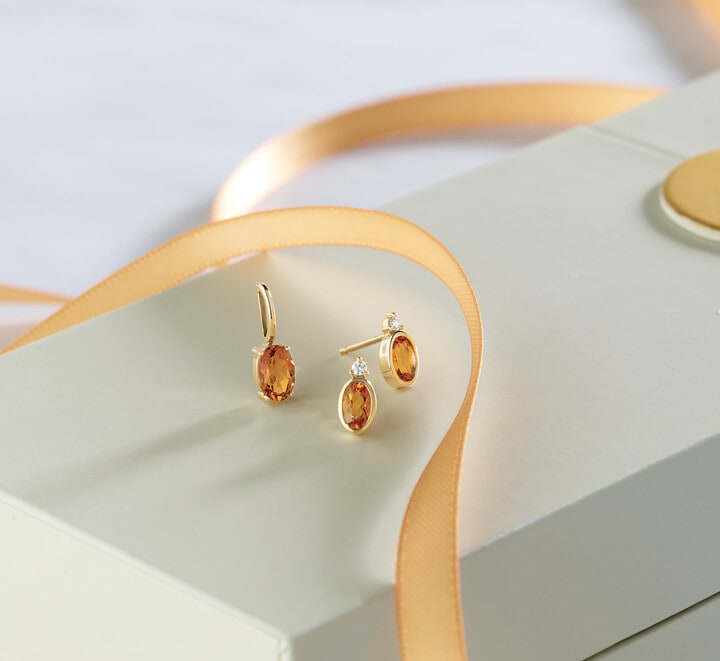
The most valued citrine shows a saturated, even color without a brownish or smoky tint. Shades range from bright lemon yellow to golden honey to a deep reddish orange often called Madeira citrine, named for the color of Madeira wine. Choose the shade that feels most like you. Lighter tones read fresh and modern, while deeper tones feel rich and autumnal.
Clarity and Cut
Most citrine is eye-clean, meaning you won’t see inclusions without magnification. Because the gem is so clear, cutters can shape it into ovals, cushions, emerald cuts, and custom shapes that show off its sparkle. A well-cut stone returns light evenly across the face, with no dark or washed-out areas.
Metal and Setting
Yellow gold deepens citrine’s warmth, while white gold and platinum give it a cooler, crisper contrast. For a citrine birthstone ring you’ll wear every day, a bezel or protective prong setting helps guard the edges of the stone against knocks.
Durability for Everyday Wear
At 7 on the Mohs scale, citrine is durable enough for rings, earrings, bracelets, and pendants. It resists scratches from everyday dust and grit, though a hard blow can chip a facet edge. Remove rings before gardening, the gym, or heavy housework.
How Can You Tell If Citrine Is Real?
The most reliable way to confirm genuine citrine is a professional evaluation by a trained gemologist. Glass, synthetic quartz, and other yellow gems can all resemble citrine at a glance.
A few signs can help at home:
- Natural citrine usually shows a soft, even yellow, often on the paler side.
- Heat-treated citrine is genuine quartz and often shows deeper orange or reddish tones. Ask your jeweler to disclose any treatment.
- Glass imitations may contain tiny round bubbles, feel warmer to the touch, and show worn or rounded facet edges over time.
Buy from a jeweler who discloses treatments clearly and stands behind what they sell.
How to Care for Citrine Jewelry
Citrine needs very little to stay bright. A simple routine keeps the stone clear and the setting secure.
Cleaning at Home
- Soak the piece in warm water with a few drops of mild dish soap.
- Brush gently with a soft toothbrush, especially behind the stone where lotion and soap collect.
- Rinse well and dry with a soft, lint-free cloth.
What to Avoid
- Harsh household chemicals, including bleach and chlorine
- Sudden temperature changes, which can stress the stone
- Long, intense exposure to direct sunlight or heat, which may fade some citrine over time
Storage and Professional Care
Store citrine separately in a soft pouch or lined compartment. Harder gems, such as diamonds, sapphires, and topaz, can scratch it. Have rings and other daily pieces checked once or twice a year so a jeweler can tighten loose prongs before a stone goes missing.
Citrine Birthstone Jewelry at Day’s Jewelers
At Day’s Jewelers, our sales team members can help you compare citrine and topaz side by side, in natural light, so you can see how each one wears on you. We carry citrine rings, pendants, and earrings in yellow and white gold. Shop our citrine collection online.
If you have a vision our cases don’t hold, our custom design team can help you create a one-of-a-kind citrine piece, from the first sketch to the final polish.
FAQs
What is the November birthstone?
November has two birthstones: citrine and topaz. Citrine is a golden variety of quartz, and topaz is a separate mineral available in golden, blue, and other colors.
Can you wear citrine every day?
Yes. Citrine rates 7 on the Mohs hardness scale, which makes it durable enough for daily wear in most jewelry. Rings benefit from protective settings and occasional professional inspection.
Is citrine expensive?
Citrine is one of the more accessible colored gemstones. Price depends on color saturation, size, cut quality, and the metal and setting of the finished piece.
What are alternatives to the citrine birthstone?
People who love citrine’s color often consider golden topaz, yellow sapphire, or a yellow diamond. Each offers a similar warmth with different hardness and price points.
A Warm Choice for November
The citrine birthstone carries the color of late-autumn light into the shortest days of the year. It wears easily, cares for simply, and comes in shades that suit nearly every style, from a pale lemon solitaire to a deep Madeira pendant.
Whether you’re marking your own November birthday or choosing a gift for someone you love, citrine offers warmth you can wear every day.
Visit your nearest Day’s Jewelers location to see our citrine collection in person, or explore November birthstone jewelry online.